Expert Comment
Is the Strait of Hormuz becoming safer as oil flows recover?
ACLED’s Middle East Analyst Valentin d’Hauthuille comments on what is happening in the Strait of Hormuz
Crude oil flows through the Strait of Hormuz have recovered significantly in recent weeks, with volumes now approaching pre-war levels despite continued risks to commercial shipping. The increase has been made possible in part by a US-supported tanker shuttle system and an increase in ship-to-ship transfers in the Gulf of Oman. But does the recovery in oil flows mean that the threat to commercial shipping is easing?
Valentin d’Hauthuille, ACLED’s Middle East Analyst, said:
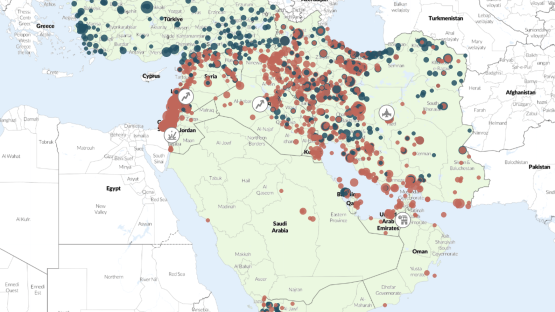
“The recovery in oil flows should not be mistaken for an easing of the threat to commercial shipping. ACLED data records that September was, in fact, the month with the highest number of successful Iranian attacks on commercial shipping since March, when the Iran-US conflict was at its peak.
“Tankers have been the main target, with more struck in September than in March at the height of the conflict. ACLED records at least 16 tankers struck in September, alongside hits on a bulk carrier and on a passenger/cargo ship. Of the 18 ships struck throughout the month, at least 11 had established ties to the UAE, Kuwait, or Saudi Arabia.
“It is also possible that the number of attacks might actually be higher, as the opacity around what is truly happening in the Strait of Hormuz has been increasing in recent weeks. The UK Maritime Trade Operations Center –an organization that reports some of the attacks taking place– has increasingly been publishing ‘time-late reports,’ making it harder to understand the real-time situation in the Strait.
“At the same time, US communication around Iranian attacks has significantly decreased. Despite reports of eight US Marines sustaining minor injuries from an Iranian missile strike on a commercial ship in mid-September, the US has neither officially commented on the event nor retaliated against Iran. In the context of the upcoming mid-term elections, it is in Washington’s interest to focus on positive developments such as the recovery of crude oil flows rather than drawing attention on continued Iranian attacks. The “tanker for tanker” policy devised by the Trump administration earlier this month, according to which the US would retaliate against an Iranian tanker for each tanker attacked by Iran, only lasted a few days.
“With Iranian attacks increasingly going unanswered, further attacks over the next few weeks remain likely. As the new shipping arrangements reduce one of Iran’s most important sources of leverage, Tehran may have a greater incentive to continue using attacks on commercial shipping to maintain pressure amid ongoing negotiations with the US.”
Want to know more? Journalists can contact the ACLED Press Office to arrange interviews or request expert analysis.
Explore our Middle East Conflict Monitor for the latest on the wider region, or browse our specialized data tools.
Not a member of the press? Speak to the team about subscription options and access.