Monitor
Middle East Conflict Monitor
This interactive map includes all ACLED data covering the Middle East from 1 January 2024 to present.
Understand conflicts in the Middle East
Middle East analysis
Why is Israel demolishing memorials commemorating Palestinian militants?
ACLED’s Farid Kirreh comments on the Israeli military’s growing campaign to demolish Palestinian memorials, including those commemorating militants killed by Israeli forces, and what it reveals about its approach to counter-insurgency in the West Bank.

Yemen and the Gulf weekly conflict update: 9 November 2026
The risk of renewed US-Iran hostilities remains elevated, while continued maritime attacks, Houthi strikes, and government-militia tensions in Iraq threaten critical infrastructure.
What does Israel's Election Reveal About Political Mobilization?
ACLED’s Israel analyst, Matan Ayash, comments on how electoral turnout among Arab citizens, Haredi communities, and anti-Netanyahu voters reflects broader patterns of political mobilization and public dissatisfaction in Israel, drawing on ACLED's protest data from the past three years.
The threat of an infrastructure war looms as US-Iran confrontation enters a critical phase
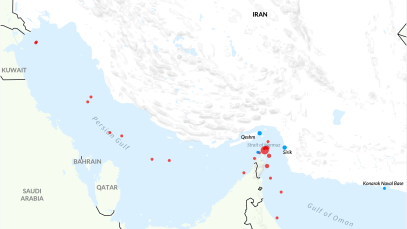
As US midterms conclude, renewed US-Israeli strikes on Iran could trigger a wider war involving attacks on critical infrastructure across the Gulf.
Is Israel targeting Hamas with a different tactic ?
Line Abd Rabbo comments on Israel’s targeting of Hamas’s financial networks alongside its military leadership in Gaza.
Are the Houthis expanding frontlines inside Yemen?
Sherwan Hindreen Ali comments on the Houthis’ expanding attacks on Aden and other areas beyond the frontlines, and what they reveal about the group’s evolving tactics and reach.

Could Jordan’s airstrikes in southern Syria undermine security cooperation with Damascus?
Muaz Al Abdullah comments on Jordan’s airstrikes in southern Syria and their implications for security
Could the Hebron attack lead to wider Israeli military operations in the West Bank?
Nasser Khdour comments on Israel’s military response to the Hebron attack and the risk of wider operations in the West Bank following the country’s elections.

Showing 10 of 324 items
Why is Israel demolishing memorials commemorating Palestinian militants?
ACLED’s Farid Kirreh comments on the Israeli military’s growing campaign to demolish Palestinian memorials, including those commemorating militants killed by Israeli forces, and what it reveals about its approach to counter-insurgency in the West Bank.
Yemen and the Gulf weekly conflict update: 9 November 2026
The risk of renewed US-Iran hostilities remains elevated, while continued maritime attacks, Houthi strikes, and government-militia tensions in Iraq threaten critical infrastructure.
What does Israel's Election Reveal About Political Mobilization?
ACLED’s Israel analyst, Matan Ayash, comments on how electoral turnout among Arab citizens, Haredi communities, and anti-Netanyahu voters reflects broader patterns of political mobilization and public dissatisfaction in Israel, drawing on ACLED's protest data from the past three years.
The threat of an infrastructure war looms as US-Iran confrontation enters a critical phase
As US midterms conclude, renewed US-Israeli strikes on Iran could trigger a wider war involving attacks on critical infrastructure across the Gulf.
Is Israel targeting Hamas with a different tactic ?
Line Abd Rabbo comments on Israel’s targeting of Hamas’s financial networks alongside its military leadership in Gaza.
Are the Houthis expanding frontlines inside Yemen?
Sherwan Hindreen Ali comments on the Houthis’ expanding attacks on Aden and other areas beyond the frontlines, and what they reveal about the group’s evolving tactics and reach.
Could Jordan’s airstrikes in southern Syria undermine security cooperation with Damascus?
Muaz Al Abdullah comments on Jordan’s airstrikes in southern Syria and their implications for security
Could the Hebron attack lead to wider Israeli military operations in the West Bank?
Nasser Khdour comments on Israel’s military response to the Hebron attack and the risk of wider operations in the West Bank following the country’s elections.
Escalating Houthi attacks disrupt Saudi aviation and increase risks to energy exports
Continued Houthi attacks threaten Saudi aviation and energy infrastructure, with economic consequences extending beyond the physical damage.
Why is tribalism rising in post-Assad Syria?
Muaz Al Abdullah comments on the rise of tribal disputes in Syria and State inaction further fueling local distrust